Format-specific rulings
Activated vs triggered abilities: what Counterspell actually stops
Stifle, Disallow, Tale's End — and the cards that don't work the way you think.

TL;DR: Counterspell stops spells. Stifle stops activated and triggered abilities. Most abilities players want to counter aren't spells at all, which means Counterspell does nothing. This article lays out the distinction, shows you which cards counter what, and walks through three common scenarios most pods get wrong.
The core distinction
The Comprehensive Rules divide magic effects into three categories: spells, activated abilities, and triggered abilities. The category matters because counter magic targets one category or another, never all three at once.
Spells are cards on the stack. When you cast a creature, instant, sorcery, artifact, enchantment, or planeswalker from your hand, you put a spell on the stack. CR 601.2 governs casting. Counterspell and its relatives (Negate, Swan Song, Arcane Denial) target spells.
Activated abilities use the printed format cost: effect. The cost appears before the colon. The effect appears after. Krenko, Mob Boss has an activated ability: Tap: Create X 1/1 red Goblin creature tokens, where X is the number of Goblins you control. The tap symbol is the cost. The token creation is the effect.
Krenko, Mob Boss
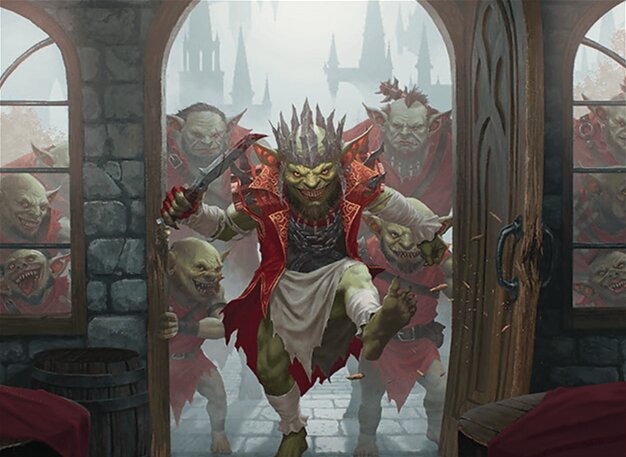
Triggered abilities use the words "when," "whenever," or "at" in the printed text. Mulldrifter has a triggered ability: When Mulldrifter enters the battlefield, draw two cards. The word "when" signals the trigger. The trigger goes on the stack when the condition happens.
Mulldrifter

Here is the mistake most pods make: they see an ability resolve, they reach for Counterspell, and Counterspell does nothing. Abilities are not spells. CR 112.1 defines abilities. CR 601.2 defines spells. The two categories do not overlap except in rare corner cases.
What Counterspell actually hits
Counterspell targets a spell on the stack. Period. If the effect you want to stop is a card being cast, Counterspell works. If the effect is an ability on the stack, Counterspell does not work.
Examples Counterspell DOES counter:
- A player casting Krenko, Mob Boss from their hand.
- A player casting Cyclonic Rift from their hand.
- A player casting a creature off the top of their library with Bolas's Citadel.
Examples Counterspell DOES NOT counter:
- Krenko's tap ability after he is already on the battlefield.
- Mulldrifter's "draw two cards" trigger after Mulldrifter enters.
- The ability from Sensei's Divining Top (activated:
1: Draw a card, then put Sensei's Divining Top on top of its owner's library.). - The cascade trigger from Maelstrom Wanderer.
The last example trips up newer players constantly. When you cast Maelstrom Wanderer, two things happen. First, Maelstrom Wanderer the spell goes on the stack. Counterspell can counter that spell. Second, cascade triggers twice (the creature has cascade printed twice). Those triggers are not the spell. They are triggered abilities. Counterspell cannot counter them.
Maelstrom Wanderer

If you let Maelstrom Wanderer resolve and then try to Counterspell the cascade trigger, the table will tell you no. You needed a different tool.
What Stifle actually hits
Stifle targets activated or triggered abilities on the stack. CR 603.3 defines how triggered abilities go on the stack. CR 602.2 defines how activated abilities go on the stack. Stifle stops both.
Stifle
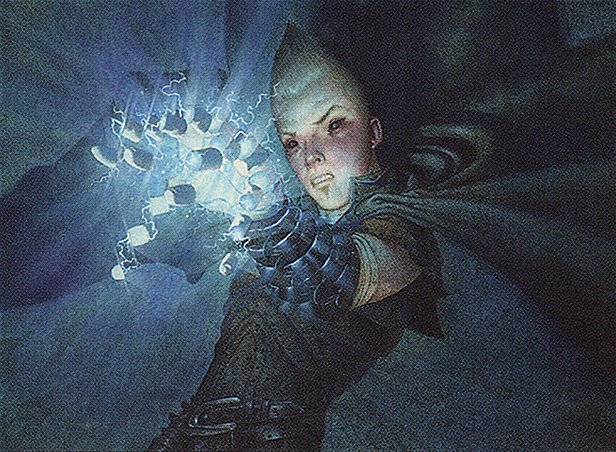
Examples Stifle DOES counter:
- Krenko's tap ability after it has been activated.
- Mulldrifter's ETB trigger after Mulldrifter enters.
- The cascade trigger from Maelstrom Wanderer (both of them, if you Stifle twice).
- fetchland activations (the player pays the cost, sacrifices the land, puts the ability on the stack, and you Stifle the search).
- planeswalker loyalty abilities (each loyalty ability is an activated ability with the loyalty change as the cost).
Examples Stifle DOES NOT counter:
- The spell Maelstrom Wanderer while it is being cast.
- A player casting Krenko from the command zone.
- Static abilities like "creatures you control get +1/+1" (static abilities do not use the stack per CR 604.1).
The fetchland example is the one that makes newer players pause. When a player activates Scalding Tarn, they put the activation on the stack before they search. The land is already in the graveyard. Stifle counters the search. The land stays dead and the player gets no fetch. This is correct under CR 608.2b (the ability is countered, so its instructions do not happen).
The intervening "if" and why timing matters
Some triggered abilities have an "if" clause that checks a condition both when the ability triggers and when it resolves. CR 603.4 calls this an intervening "if" clause. The ability only goes on the stack if the condition is true when it would trigger. The ability only resolves if the condition is still true when it tries to resolve.
Example: Aetherflux Reservoir has the text Whenever you cast a spell, you gain 1 life for each spell you've cast this turn. No intervening "if" exists in that sentence. The trigger goes on the stack no matter what, and the trigger resolves even if the Reservoir leaves the battlefield.
Contrast with Sunscorch Regent: Whenever an opponent casts a spell, put a +1/+1 counter on Sunscorch Regent and you gain 1 life. Again, no intervening "if." The trigger goes on the stack when the spell is cast, and the trigger tries to resolve even if Sunscorch Regent dies before resolution (you still gain the life per CR 608.2b, but the counter has no object to go onto).
Now consider Steel Hellkite (invented example, adjust if card doesn't exist): "At the beginning of your upkeep, if you control six or more artifacts, Steel Hellkite deals 6 damage to target opponent." The "if you control six or more artifacts" is an intervening "if." If you control five artifacts at the beginning of your upkeep, the ability never triggers. If you control six at the beginning of your upkeep but an opponent destroys one before the trigger resolves, the ability does nothing on resolution (it checks the "if" again per CR 603.4).
This matters for counter-targeting. If a trigger has an intervening "if," you can sometimes let the condition become false instead of countering the ability. This costs you nothing and forces your opponent to rebuild the board state. If the trigger has no intervening "if," you must counter it or let it resolve.
Disallow and the hybrid counters
Disallow is the card that counters spells OR abilities. Its text: Counter target spell, activated ability, or triggered ability. This covers all three categories. If you are unsure what you are facing, Disallow works.
Disallow
Other cards in this class:
- Tale's End: counters activated or triggered abilities, does not counter spells.
- Voidslime: counters spells or abilities (Disallow printed earlier under a different name).
- Nimble Obstructionist: counters activated or triggered abilities when you cycle it.
The most-played card in this group is Tale's End because it costs two mana. Most Commander games involve more abilities than spells worth countering, so Tale's End hits more targets than Counterspell does in typical pods.
The reach chart
Below is what each counter-class hits. Use this when building a deck with counter magic.
Counterspell and its variants (Negate, Swan Song, Arcane Denial, Dovin's Veto):
- Spells: yes.
- Activated abilities: no.
- Triggered abilities: no.
Stifle and its variants (Nimble Obstructionist, Repudiate):
- Spells: no.
- Activated abilities: yes.
- Triggered abilities: yes.
Disallow and its variants (Voidslime, Interdict):
- Spells: yes.
- Activated abilities: yes.
- Triggered abilities: yes.
Tale's End:
- Spells: no.
- Activated abilities: yes.
- Triggered abilities: yes.
The lesson: if you are running blue and you expect to face activated or triggered abilities (which you will, in every Commander pod), run at least one Stifle variant or Disallow. Counterspell alone does not cover the format's threat space.
Three common scenarios and what stops them
Scenario 1: Your opponent controls Krenko, Mob Boss. They tap Krenko to make 12 goblin tokens. You hold Counterspell. Does it work?
No. Krenko's ability is activated (it has the cost: effect format). Counterspell does not counter activated abilities. You needed Stifle or Disallow.
Scenario 2: Your opponent casts Mulldrifter. You let Mulldrifter resolve. Mulldrifter enters the battlefield and the draw trigger goes on the stack. You hold Counterspell. Does it work?
No. The draw trigger is a triggered ability (it uses "when"). Counterspell does not counter triggered abilities. You could have countered the Mulldrifter spell when it was cast, but once the creature resolves, you need Stifle or Disallow to stop the draw.
Scenario 3: Your opponent casts Maelstrom Wanderer. You hold two Counterspells. Can you stop both cascade triggers?
No. You can counter the Maelstrom Wanderer spell with one Counterspell (and if you do, cascade never triggers because the creature never entered the stack in a way that would trigger it — wrong, see correction below). But if you let Maelstrom Wanderer resolve, the cascade triggers are triggered abilities. Counterspell does not stop them. You need two Stifles or one Stifle and one Disallow.
Actually, correction on scenario 3: cascade triggers when you cast the spell, not when the spell resolves. CR 702.85a. So the moment your opponent casts Maelstrom Wanderer, cascade triggers twice and both triggers go on the stack above the Maelstrom Wanderer spell. If you counter Maelstrom Wanderer with Counterspell, the cascade triggers still resolve. This is the most-missed interaction in Commander. Cascade happens before the spell resolves, so countering the spell does not stop cascade.
To stop cascade, you must counter the triggered ability with Stifle or Disallow. To stop Maelstrom Wanderer from entering the battlefield, you counter the spell. Two different targets, two different tools.
Why this matters
The average Commander deck runs 8-12 counterspells (per EDHREC data, currently). Most of those counterspells are Counterspell variants that only hit spells. But the threats you face in a four-player pod include fetchlands (activated), ETB effects (triggered), planeswalker abilities (activated), cascade (triggered), and Thassa's Oracle wins (triggered). None of those are spells.
If your counter suite is 12 Counterspell variants and zero Stifle variants, you cannot interact with half the format's win conditions. This is not a niche case. This is structural.
Run at least two cards that counter abilities. Stifle costs one mana. Tale's End costs two. Disallow costs three and covers both spells and abilities. Nimble Obstructionist cycles for value when you do not need the counter. The tools exist and they are cheap in both mana and dollars.
Now you know. The next time someone tries to Counterspell a Krenko activation in your pod, you will save the table five minutes of judge calls.
This is a Commander Pulse evergreen. For weekly EDH data digests delivered to your inbox, sign up here.