Design lineage and lore
Pact of Negation to Fierce Guardianship: the 20-year design history of 'free' counterspells
Why 'free' is never free, and how design has tightened the rules with each new printing.
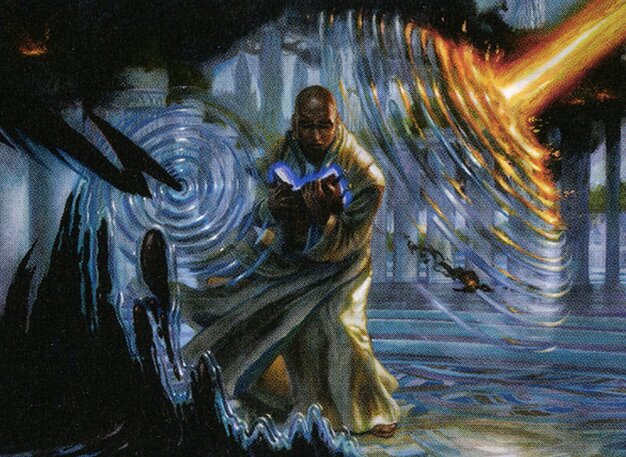
TL;DR: From 2007 to 2021, each new "free" counterspell added tighter conditions: Pact of Negation demanded payment later, Force of Negation locked you to opponent turns, Fierce Guardianship required your commander in play, and the pitch Elementals forced you to exile resources. The design space hasn't expanded. It's narrowed into a tighter and tighter box, and each new printing proves Wizards learned from the last.
The original sin: Pact of Negation (2007)
Pact of Negation
When Future Sight shipped in 2007, Pact of Negation introduced a design template that haunts Magic to this day: the deferred cost. You cast it for free. Then at your next upkeep, you either pay 3UU or you lose the game.
Mark Rosewater called the Pact cycle "a design that pushed the boundaries of what we could do with alternate costs" in his 2008 article Futuresight Design. The risk was deliberate. You could win before the upkeep trigger mattered. You could ramp to pay. You could lose spectacularly if you forgot.
In competitive formats, the Pact became a tool for combo pilots who won on the stack or the turn after casting it. In Commander, the deferred cost worked differently. Four-player games run longer. Paying 3UU next turn is usually manageable. The card felt free, even when it wasn't.
The lesson Wizards took: deferred costs in multiplayer don't gate power the way they do in two-player formats. The next generation learned from that.
The gatekeeper: Force of Will and the pitch template
Before moving forward, we need to acknowledge the design ancestor: Force of Will from Alliances (1996). Pay 1 life and exile a blue card from your hand, or pay its normal cost. The pitch template existed for 11 years before Pact, but Wizards didn't build on it until 2019.
Why the gap? Because Force of Will warped every format it touched. Legacy players know this. Vintage players know this. Wizards spent more than a decade avoiding the design space entirely. When they finally returned to it, they returned carefully.
The tightening: Force of Negation (2019)
Force of Negation
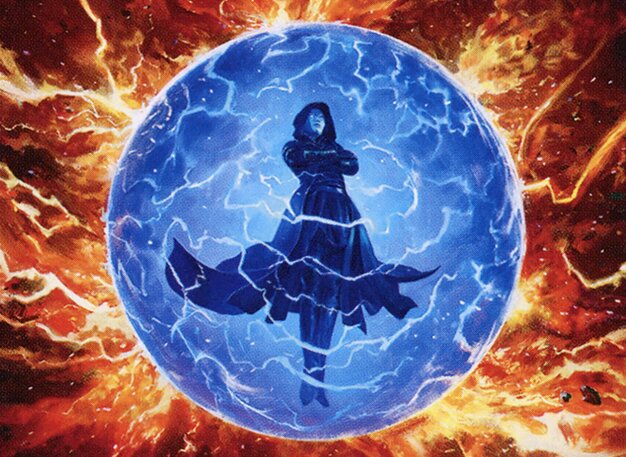
Modern Horizons gave us Force of Negation in 2019, and the card carried three restrictions Force of Will didn't have:
- Only on an opponent's turn. If you're casting it for free, you can't use it to protect your own combo.
- Exile target. The spell you counter doesn't go to the graveyard. This matters in formats where recursion is common.
- Pitch cost remains. Exile a blue card from your hand. Same as Force of Will.
The first restriction is the critical one. You can't hold up mana for your own win. You can't bluff the counter and then use it when you go for the combo yourself. Wizards drew a bright line: free counters are for defense, not offense.
Commander players felt this immediately. In a four-player game, "opponent's turn" means you still have answers for 75% of the rotation. But you lose the flexibility to protect your own win. That's a real cost, even though you paid zero mana.
The commander tax: Fierce Guardianship (2020)
Fierce Guardianship
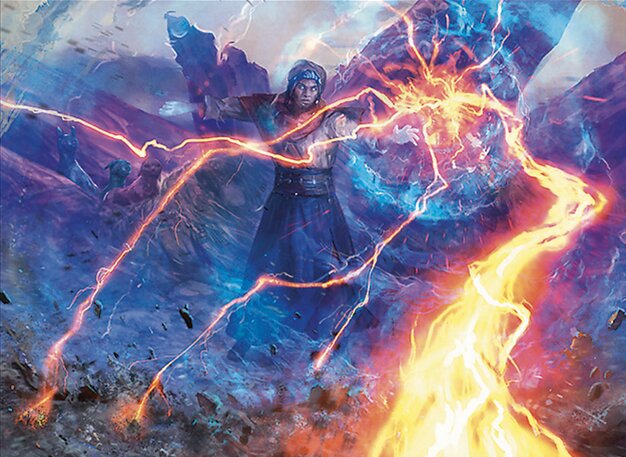
One year later, Commander Legends gave us Fierce Guardianship. Counter target spell. If you control your commander, this spell costs 0 to cast.
This is the tightest gate yet. You need your commander on the battlefield. In a format where commanders draw removal constantly, that's not a given. Turn-three commanders eat turn-four removal. Turn-five recast costs two more. Turn-six recast costs four more.
The math: if your commander survives three turn cycles on average before eating removal, you get three turns per game where Fierce Guardianship is free. The rest of the time, it's a three-mana counterspell with no additional utility. That's mediocre.
Except in decks that protect the commander. Except in decks where the commander is the win condition. Except in Voltron strategies, artifact commanders that dodge sorcery-speed removal, or partners where you always have one in play.
Wizards gated the free effect behind deck-construction choices. You don't just cast the card. You build around it. That's a tighter conditional than anything Pact or Force of Negation demanded.
The resource drain: Subtlety and the pitch Elementals (2021)
Modern Horizons 2 in 2021 gave us a full cycle of pitch Elementals: Subtlety, Solitude, Grief, Fury, and Endurance. Subtlety is the blue one. You can cast it for 2UU, or you can pay 1U and exile a blue card from your hand.
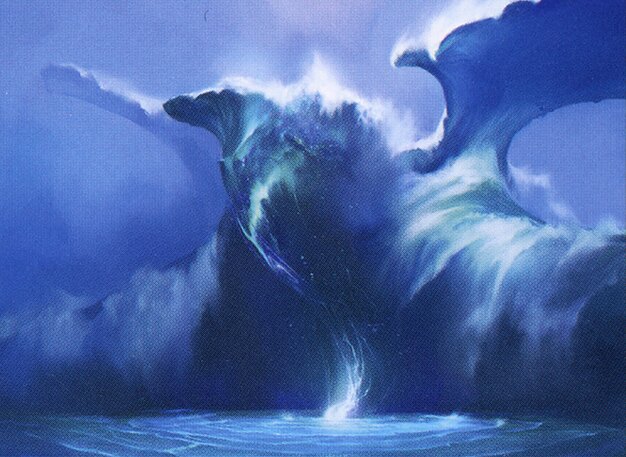
This isn't free. It's cheaper. You're still paying mana. You're still exiling a card. And you're getting a 2/2 flier with an enters-the-battlefield ability that puts a spell or permanent on top of its owner's library.
The design here is elegant. Subtlety isn't better than Force of Negation at stopping threats. It's worse. Putting a spell on top of the library instead of exiling it gives the opponent another draw step to recast. But you get a creature. You get a body on the board.
Wizards took the pitch template and turned it into a two-for-one that costs resources up front. The "free" part is gone entirely. Now you're choosing between full cost and reduced cost, both of which require payment.
The narrowing design space
Here's the pattern:
- 2007: Pact of Negation. Free now, pay later. No other restrictions.
- 2019: Force of Negation. Free if you pitch a card, only on opponent turns.
- 2020: Fierce Guardianship. Free if your commander is in play.
- 2021: Subtlety. Not free. Reduced cost if you pitch a card.
Each generation adds conditions. Each condition constrains when and how the card works. The design space isn't expanding. It's collapsing into a smaller and smaller box where "free" means "free under circumstances Wizards can predict and balance."
This is intentional. In his 2019 Modern Horizons retrospective, Mark Rosewater wrote: "We learned from Force of Will. We learned from the Pacts. The alternate-cost design space is narrow, and every time we enter it, we have to add guardrails."
The guardrails are visible in the card text. Only opponent turns. Only if you control your commander. Only if you're willing to exile a resource. The spells feel powerful because they dodge mana costs, but the costs are still there. They're just hidden in the setup.
Why this matters for deck construction
Most Commander players see a free counterspell and think "this is good, I should play it." That's half right. The question isn't whether the card is good. The question is whether your deck satisfies the conditional.
If you're playing a low-to-the-ground aggro commander that dies every other turn cycle, Fierce Guardianship is a 3-mana counter that's free 30% of the time. That's worse than Arcane Denial at 1U with card draw stapled on.

If you're playing a creatureless storm deck, Force of Negation is live on opponent turns but dead when you're comboing off. That's worse than Swan Song at U, which you can cast anytime.
If you're playing mono-blue control with 15 blue cards in hand on average, Force of Negation and Subtlety are live every turn. The pitch cost is negligible. Now the cards are absurd.
The design tightening means deck fit matters more than raw card power. Wizards didn't make free counterspells weaker. They made them conditional, and the condition determines whether they belong in your 99.
The future: tighter still
The trajectory is clear. Each new free counterspell will have a narrower gate than the last. Maybe the next one requires you to control an artifact and a creature. Maybe it only counters spells that target permanents you control. Maybe it exiles itself after use so you can't recur it with Eternal Witness.
The design space for "free" is nearly exhausted. Wizards can't print another Force of Will. They can't print another Pact without upkeep triggers. Every new attempt has to justify why it's not breaking the format, and the justification is always the same: more conditions, tighter gates, narrower windows.
Twenty years from Pact to Subtlety, and the lesson is this: "free" was never free. It was always conditional. Wizards just got better at writing the conditions down.
This is a Commander Pulse evergreen. For weekly EDH data digests delivered to your inbox, sign up here.