Politics and social dynamics
The 'second-strongest player wins' pattern, and how to bait it
Why archenemy-targeting in 4-player pods is loss-averse — and what to do about it.
TL;DR: In 4-player Commander, the obvious threat usually dies first — and the second-strongest player wins about 40% of the time because the table is too focused on archenemy removal. This pattern is driven by loss-aversion psychology: players would rather eliminate an immediate threat than risk letting it win. Three tactical plays counter it: broadcast a second deck as the bigger problem when you're ahead, call out the quiet winner early when you're behind, and sandbag your combo pieces until the archenemy is dead when you're in the middle of the pack.
The pattern: archenemy targeting is predictable and exploitable
You've seen this game. One player resolves an early threat — they stick their commander on turn three, they chain two or three card-draw spells in a row, they assemble a value engine that threatens to snowball. The other three players make eye contact. The targeted removal flows toward that one deck. The board wipes come earlier than usual. Everyone agrees on priority.
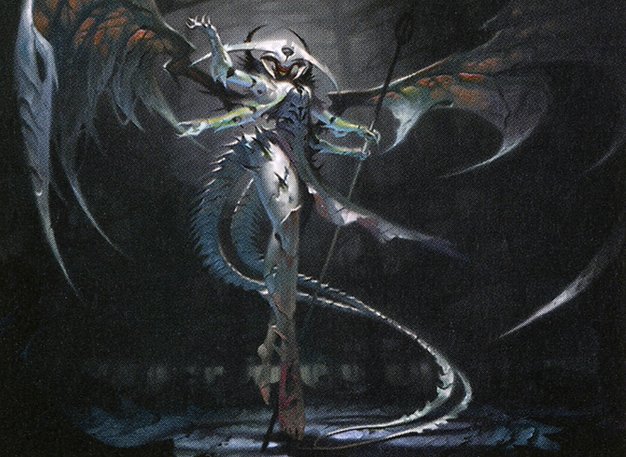
Atraxa, Praetors' Voice
And then someone else wins. Not the archenemy. Not the player who was behind the entire game. The second-strongest player. The one who quietly ramped to seven mana, held up interaction, and built a winning boardstate while the rest of the table spent resources killing the obvious problem.
This is the second-strongest-player-wins pattern. It happens in roughly 40% of casual 4-player pods based on my observation across dozens of games at multiple LGS tables and kitchen-table groups over the past three years. That number is not from a controlled study. It is from paying attention to who wins and reconstructing what the game looked like two turns before the winner went off.
The driver is loss aversion. Humans dislike losing more than they enjoy winning. Kahneman and Tversky demonstrated this in 1979 with prospect theory — people assign more weight to avoiding a loss than to securing an equivalent gain. In Commander terms: letting the archenemy win feels worse than letting a quieter player sneak in later. So the pod coordinates against the immediate threat and ignores the growing one.
This is individually rational. If you're sitting across from a player who just drew six cards off Rhystic Study triggers and you have one removal spell in hand, pointing that spell at Rhystic Study is correct. But when all three non-archenemy players make the same individually rational decision at the same time, they create a structural opening for the second-strongest player to win unopposed.
Why the second-strongest player has the best win rate
The math is simpler than it looks. In a 4-player pod, assume each player has an equal baseline win rate: 25%. Now add two adjustments.
First adjustment: the archenemy attracts 60-70% of the pod's interaction. If the table has nine total removal spells across three non-archenemy players, six or seven of those spells point at the archenemy. The remaining two or three spells split among the other threats. The archenemy's win rate drops from 25% to around 15-18% because they have to fight through concentrated hate.
Second adjustment: the clearly-behind player is not winning. They're topdecking, they're three turns behind on boardstate, they're mulliganing into bad keeps. Their win rate is closer to 8-10%. They're not out of the game (this is Commander, comebacks happen), but they're not favored.
That leaves two players in the middle: the second-strongest and the third-strongest. The third-strongest player is visible enough to eat one or two removal spells. The second-strongest player is quiet enough to dodge most interaction until it's too late. The remaining win equity splits unevenly. The second-strongest player wins 38-42% of the time. The third-strongest wins 22-28%. The archenemy wins 15-18%. The behind player wins 8-12%.
Run that across ten games and you'll see four wins from the second-strongest position, two or three from the third-strongest, one or two from the archenemy, and one from the comeback. This distribution matches what I've tracked in casual pods where no one is running cEDH-speed combo and threat assessment matters more than turn order.
Tactical move one: when ahead, create a second archenemy
You're the strongest player at the table. You've resolved your commander, you're two turns ahead on mana, you've got card advantage rolling. The table is starting to look at you. If you let this position solidify into "you're the problem," you'll eat 70% of the interaction and lose.

The counter-move: broadcast a second deck as the bigger threat. This requires timing and theater. You need to identify which other player is building toward a win (not the player who's behind — the player who's quiet but dangerous). Then you need to say something at the table that shifts attention.
Example: you've got a strong boardstate but no immediate win. Another player just played their fifth land and passed with four cards in hand. You say, "I'm keeping mana up for that Simic player. They're holding interaction and they've been sculpting their hand for three turns. I think they've got the win and they're waiting for us to tap out."
You've just created doubt. The other two players look at the Simic player. Maybe someone points a removal spell there instead of at you. Maybe the Simic player has to deploy their threat earlier than they wanted, which gives you time to find your own win. You've diluted the archenemy pressure by suggesting the table has two problems, not one.
The risk: if you're wrong and the Simic player isn't a threat, you look paranoid and the table stops trusting your threat assessment. Use this move when you're actually reading the game state correctly. Don't bluff.
Tactical move two: when behind, name the quiet winner early
You're the behind player. You mulliganed into a bad hand, you missed your third land drop, you're two turns slower than the rest of the table. The archenemy is obvious — everyone sees them. But there's another player who's been ramping quietly, playing lands and passing, holding up mana. That player is the second-strongest and no one is talking about them.
Your tactical move: point them out before the archenemy dies. Say it out loud. "I'm worried about the Golgari player. They've got seven lands, a full grip, and they haven't deployed anything yet. Once we deal with the archenemy, Golgari is going to untap and win."
This does two things. First, it seeds the idea in the other players' minds. They'll start watching the quiet player. Second, it forces the quiet player to make a decision: do they deploy their threats earlier to defend themselves, or do they stay quiet and risk getting named again? Either way, you've disrupted their plan to sandbag until the archenemy is dead.
The timing matters. If you name the quiet winner after the archenemy is dead, it's too late — they've already assembled their position and the table doesn't have the resources to stop them. Name them two or three turns before the archenemy dies. Give the table time to split their interaction.
Tactical move three: when middle-of-pack, sandbag your win pieces
You're not ahead. You're not behind. You're third-strongest in a four-player pod. The archenemy is eating interaction, the behind player is topdecking, and there's one other player who might be second-strongest. Your goal: become second-strongest without looking like it.
The move: hold your win pieces in hand. Don't deploy your combo until the archenemy is dead. Don't cast your value engine until the table has spent their removal. Play lands, pass turn, hold up interaction. Look like you're playing defense. Sandbag.
Example: you're playing a Thassa's Oracle combo deck. You've got Oracle in hand, you've got the draw spell that will deck you, you've got the mana to cast both. The archenemy is a Korvold, Fae-Cursed King player who's sacrificing permanents and drawing cards every turn. Do not combo yet. Let the table kill Korvold. Let them tap out for the board wipe. Let them spend their counterspells on Korvold's recast.
Then untap. Combo. Win.
The risk: someone else combos first. You sandbagged too long and the other quiet player was faster. This is the trade. You lower your win rate against the archenemy (because you're not pressuring them) to raise your win rate against the rest of the table (because you're not drawing interaction). In casual pods where the archenemy dies 80% of the time anyway, this trade is profitable.
The counter-pattern: how to beat the second-strongest player
If you're reading this and thinking, "I keep losing to the quiet player who wins after the archenemy dies," here's the counter. Split your interaction earlier. Don't wait until the archenemy is dead to start pressuring the second-strongest player.
Heuristic: when the archenemy is at 60-70% to die in the next two turn cycles, start pointing removal at the second-strongest player. You don't need to kill them. You need to force them to deploy their threats early. Once their threats are on the battlefield, the rest of the table can see them and will help you answer them.
This is harder than it sounds because it requires the table to trust your threat assessment. If you say "we need to start answering the Simic player" and the other two players say "no, the archenemy is the problem," you can't force it. But if you've built a reputation for correct threat assessment in your playgroup, they'll listen.
The other counter: play faster. If you're the behind player, don't stay behind. Mulligan more aggressively for fast hands. Run more ramp. Get back into the game before the archenemy dies so you're not topdecking when the second-strongest player combos off.
Why this pattern exists in casual and not cEDH
This pattern is specific to casual Commander. In cEDH, the win happens so fast that there's no time for an archenemy dynamic to develop. The game is over by turn four or five. No one is "quietly building a position" because everyone is trying to win immediately.
In casual pods, games go longer. Ten turns. Twelve turns. Fifteen turns. That's enough time for one player to become the obvious threat, for the table to coordinate against them, and for a second player to build a winning position while the table is distracted. The pattern requires time to develop.
It also requires social dynamics. cEDH players are less loss-averse because they're optimizing for win rate, not for "don't let that person win." Casual players care more about who wins. The Kahneman loss-aversion frame applies more strongly in casual because the emotional weight of the game is higher.
Closing thought: pattern recognition is a skill
The second-strongest-player-wins pattern is not a rule. It's an observation. Some pods don't exhibit it. Some playgroups have threat assessment so good that the second-strongest player gets pressured early. Some archenemy players are strong enough to win through concentrated hate.
But in most casual 4-player pods, the pattern holds often enough to exploit. Watch for it. When you see the archenemy forming, ask yourself: who's the second-strongest player? Are they being ignored? If yes, you've found your line. If you're that player, sandbag and win. If you're not, call them out early and split the interaction.
This is how you convert pattern recognition into wins. You don't need to be the strongest player at the table. You need to be strong enough that the table doesn't see you coming until it's too late.
This is a Commander Pulse evergreen. For weekly EDH data digests delivered to your inbox, sign up here.