Format-specific rulings
Two legends, one resolve: state-based actions and the 'legend rule' most pods misplay
Comprehensive Rules 704.5j — when can you actually keep both?

TL;DR: When you control two legendary permanents with the same name, both exist on the battlefield until state-based actions are checked — which happens when a player would receive priority, not during stack resolution. This means enter-the-battlefield triggers resolve before you sacrifice one copy. Most pods get this timing wrong and miss critical value windows.
The scenario that breaks the table consensus
You control a Sun Titan on the battlefield. You cast Reanimate targeting a second Sun Titan in your graveyard. The spell resolves. Your friend across the table says "you have to sacrifice one immediately before the new one's trigger goes on the stack."
Sun Titan
That friend is wrong. And the mistake costs you a trigger.
Here's what actually happens according to the Comprehensive Rules. When Reanimate resolves, the second Sun Titan enters the battlefield. Now you control two legendary permanents with the same name. The legend rule exists, but it hasn't been applied yet. State-based actions — the category that includes the legend rule — are checked only when a player would receive priority. Not during spell resolution. Not between objects entering the battlefield and their triggers being put on the stack.
The second Sun Titan's enter-the-battlefield ability triggers. That trigger goes on the stack. Then, before any player receives priority, state-based actions are checked. CR 704.5j applies: "If a player controls two or more legendary permanents with the same name, that player chooses one of them, and the rest are put into their owners' graveyards."
You choose which Sun Titan to keep. Then priority passes and the trigger resolves. You get to reanimate a permanent with mana value three or less from your graveyard — even though one of your Sun Titans just died to the legend rule.
Most pods skip the trigger entirely because they apply the legend rule too early. The comprehensive rules don't support that timing.
What state-based actions are and when they're checked
CR 704.3 says: "Whenever a player would get priority, the game checks for any of the listed conditions for state-based actions, then the game performs all applicable state-based actions simultaneously as a single event."
The word "whenever" is doing work here. State-based actions aren't continuously evaluated. They're evaluated at specific moments — the moments when the game would otherwise hand priority to a player. Those moments are:
- After a spell or ability finishes resolving.
- After the active player completes a step or phase in which no spells or abilities are on the stack.
- In the middle of casting a spell or activating an ability, if that process requires a choice and state-based actions would change the game state before the choice is made (this is rare).
That first bullet is the one that matters for the legend rule timing question. When Reanimate finishes resolving, state-based actions haven't been checked yet. The second Sun Titan is on the battlefield. Triggered abilities look backward from that moment and see the Sun Titan entering. Those triggers are put on the stack. Then state-based actions are checked before any player receives priority.
The trigger is already on the stack by the time you sacrifice one of the Sun Titans.
The comprehensive rules text you need to know
CR 704.5j: "If a player controls two or more legendary permanents with the same name, that player chooses one of them, and the rest are put into their owners' graveyards."
Two parts of that sentence matter for tactics. First: "that player chooses one of them." You control both legendary permanents. You make the choice. If one of your Sun Titans has a Rancor on it and the other doesn't, you can choose to keep the suited-up one.
Second: "the rest are put into their owners' graveyards." The sacrificed legendary permanent goes to the graveyard as a state-based action, not as a cost and not as an effect that uses the stack. This means triggered abilities that care about creatures dying will trigger. If you control a Pitiless Plunderer when you sacrifice the second Sun Titan to the legend rule, you get a treasure token. That trigger goes on the stack above the Sun Titan ETB trigger that's already waiting.
Two practical scenarios where this changes your line
Scenario one: Eternal Witness loops
You control Eternal Witness. You cast Reanimate targeting a second Eternal Witness in your graveyard. Your friend says "you have to sacrifice one before the new one's trigger happens."
Eternal Witness

You don't. The second Eternal Witness enters. Its ETB trigger goes on the stack targeting Reanimate in your graveyard. State-based actions are checked. You choose to keep the new Eternal Witness and sacrifice the old one. Then the trigger resolves and you get Reanimate back in your hand.
If you applied the legend rule before the trigger, you'd have to choose whether to keep the new Witness or the old one before knowing whether the trigger would resolve. That's not how the rules work. You get the trigger first, then you make the legend-rule choice knowing what's on the stack.
Scenario two: Sakashima clones and layered choices
You control a legendary creature. You cast Sakashima of a Thousand Faces as a copy of that legendary. Sakashima's static ability says "The 'legend rule' doesn't apply to permanents you control." Both legendary permanents stay on the battlefield.
Sakashima of a Thousand Faces
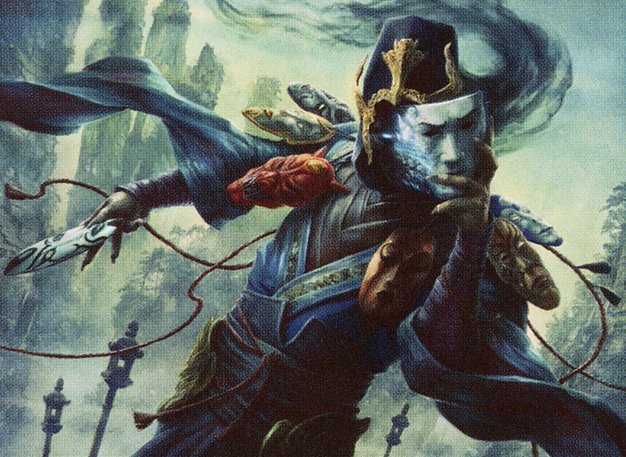
Your opponent casts Clone copying your legendary creature. They now control a legendary permanent with the same name as yours. State-based actions are checked. Your opponent controls only one legendary permanent with that name, so the legend rule doesn't apply to them. You control two legendary permanents with that name, but Sakashima's ability stops the legend rule from applying to you.
Now your opponent Murders your Sakashima. State-based actions are checked the next time a player would receive priority. Sakashima's static ability no longer applies because Sakashima isn't on the battlefield. You control two legendary permanents with the same name and no ability preventing the legend rule. You choose one and sacrifice the other.
The timing gap between "Sakashima dies" and "you choose which legendary to keep" is zero in gameplay terms, but it exists in the rules structure. Triggers that care about Sakashima dying go on the stack, then state-based actions are checked, then you make your legend-rule choice. If you control a Bastion of Remembrance and your Sakashima was a creature, you get the death trigger from Sakashima and the death trigger from whichever legendary you choose to sacrifice.
Why pods get this wrong
The confusion comes from two sources. First, many players learned the legend rule before it was changed in the Magic 2014 rules update. Before that update, if two legendary permanents with the same name were on the battlefield under any player's control, both were put into their owners' graveyards as a state-based action. The controller didn't get to choose. That version of the rule meant you could "legend-rule away" an opponent's legendary permanent by copying it.
The current rule (since 2013) checks each player's battlefield separately. You can't kill my Urza, Lord High Artificer by casting your own Urza. We each control only one legendary permanent with that name. State-based actions don't apply to either of us.
Second source of confusion: the phrase "as a state-based action" makes it sound like the legend rule is evaluated constantly. It's not. State-based actions are checked at specific moments. Between those moments, illegal game states can temporarily exist. Two legendary permanents with the same name controlled by the same player is an illegal game state, but the game tolerates that state for the microsecond between "the second one enters the battlefield" and "state-based actions are checked."
That microsecond is long enough for ETB triggers to happen.
How to play this correctly at your table
When you cast or reanimate a second copy of a legendary permanent you already control, follow this sequence:
- The spell or ability resolves. The second legendary permanent enters the battlefield.
- Triggered abilities that care about it entering are put on the stack.
- State-based actions are checked. You choose which legendary permanent to keep. The others are put into your graveyard.
- Triggered abilities that care about the legendary permanent dying are put on the stack above the ETB triggers.
- Priority passes and the stack starts resolving.
Most of the time, the ETB trigger from the second copy is the one you want. The new Sun Titan reanimates something. The new Eternal Witness gets a card back. The new Gonti, Lord of Luxury exiles cards from an opponent's library.
Occasionally, you want to keep the first copy because it has counters or auras or equipment. The timing of the legend rule lets you make that choice after seeing what triggers are on the stack. You have more information than you would if the rule was checked during resolution.
When you're playing at a table that doesn't know this timing, explain it once with the rule citation. Don't argue. Say "Comprehensive Rules 704.3 and 704.5j — state-based actions are checked when a player would get priority, which is after the ETB trigger goes on the stack." If they don't believe you, offer to look it up together. The rules are public and searchable.
The worst outcome is letting the table play it wrong and losing value you're entitled to under the actual rules. The legend rule is one of the few places in Magic where timing precision changes what cards end up in your hand.
This is a Commander Pulse evergreen. For weekly EDH data digests delivered to your inbox, sign up here.