Combo and win condition theory
Stax is a spectrum: from Winter Orb to Smokestack to soft-lock
Trinisphere ≠ Winter Orb ≠ Smokestack. Knowing which your deck wants is the whole game.

TL;DR: Stax isn't one thing. Soft stax taxes resources and slows the game. Mid stax constrains specific actions. Hard stax locks out entire game plans. Win-condition stax does all of that while actively ending the game. If your stax piece doesn't help you win, you're just wasting everyone's time.
The spectrum no one talks about
Most EDH players think stax is binary. Either you're playing stax or you're not. Either you're the villain or you're not. Either you're ruining the table's fun or you're playing fair Magic.
That's wrong. Stax is a spectrum, and where your deck sits on that spectrum determines whether you're playing control, playing prison, or just being a jerk.
The difference between Rhystic Study and Smokestack isn't just power level. It's structural. One taxes resources. One locks game actions. One slows the table down. One stops the table cold. Knowing which your deck wants is the difference between a functional game plan and a 90-minute slog that ends with three players conceding out of boredom.
Let's define the spectrum.
Soft stax: the tax collectors
Rhystic Study
Soft stax cards don't prevent anyone from doing anything. They just make doing things expensive. They tax resources. They extract value. They slow the game down by increments, not by walls.
Rhystic Study is the poster child. Every opponent still gets to play spells. They just have to pay one mana or let you draw a card. The game continues. Decisions happen. The stax player accumulates advantage.
Other cards in this category: Smothering Tithe, Mystic Remora, Thalia Guardian of Thraben, Grand Arbiter Augustin IV, Propaganda, Ghostly Prison. They all share the same structure: opponents can still do the thing, but it costs more or gives you something.
Soft stax fits into control decks that want to extend the game while building card or mana advantage. Mono-blue control wants soft stax because it buys time to assemble a win condition. Azorius blink decks want soft stax because they're already grinding value and the tax effects compound.
The math: if Rhystic Study draws you two extra cards per turn cycle and the game goes four more turns than it would have without it, that's eight cards. That's a win condition. The stax piece isn't locking anyone out. It's just accelerating your engine faster than theirs.
Mid stax: the constraint engine
Winter Orb

Mid stax cards selectively constrain. They don't lock the whole game. They lock specific actions or resources. They create asymmetry. You build your deck to break parity. Your opponents don't.
Winter Orb is the classic example. Lands don't untap. But if you're playing artifact mana or mana dorks, your resources untap fine. The game continues but the constraint is real. Opponents have to sequence carefully. They can't just vomit their hand onto the board.
Static Orb does the same thing but hits artifacts and creatures too. Cursed Totem shuts off activated abilities. Null Rod turns off artifacts. These cards don't stop the game. They stop specific game actions, and they stop them hard.
Mid stax fits into decks that can operate under the constraint. Derevi Empyrial Tactician decks love Winter Orb because Derevi untaps permanents. Selvala Explorer Returned decks love Null Rod because Selvala herself taps for mana. Yisan the Wanderer Bard decks love Cursed Totem because Yisan's ability is an activated ability that still works under his own effect (it doesn't — this is the kind of corner case you test before you build).
The bright line: if you're playing mid stax without a plan to break parity, you're just making the game miserable for everyone including yourself. Winter Orb in a deck with 35 lands and no artifact ramp is grief. Winter Orb in a deck with 15 mana dorks is a strategy.
Hard stax: the lockout
Trinisphere

Hard stax cards lock out entire game plans. They don't tax. They don't constrain selectively. They say "no" to a category of spells or actions.
Trinisphere is the best example. Spells cost at least three mana. Storm decks can't function. Fast combo decks stumble. Even casual decks that rely on cheap interaction or card draw suddenly can't operate at instant speed without telegraphing their turn.
Other cards in this category: Stony Silence (artifacts don't activate), Blood Moon (nonbasic lands are Mountains), Rest in Peace (graveyards are exiled), Deafening Silence (one noncreature spell per turn). These cards don't slow the game. They redefine the game. Entire archetypes cease to work.
Hard stax fits into cEDH decks or high-power casual decks that can win under the lock. Stax decks that run Trinisphere also run efficient creatures and win conditions that don't care about the lock. Rule of Law effects pair with Flash Hulk lines that resolve in a single instant-speed window. Blood Moon pairs with basics and a fast clock.
The math here isn't card advantage. It's inevitability. If you resolve hard stax and your deck can still win while the rest of the table can't, you win. The question is how many turns until you close. If the answer is "I don't know, I just thought it would be funny to lock the table," you're playing degenerately.
Win-condition stax: the lock-and-kill
Smokestack
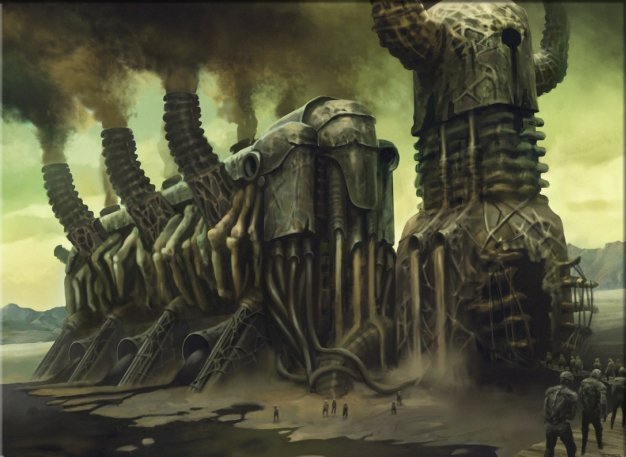
Win-condition stax is hard stax plus an active win condition. The stax piece doesn't just lock opponents out. It actively advances your game plan.
Smokestack is the cleanest example. Every upkeep, sacrifice permanents. If you have a token generator or a recursion engine, you break parity. If you have a sacrifice outlet that draws cards or drains life, Smokestack isn't just a lock. It's a kill condition.
Other cards in this category: The Abyss (with indestructible creatures or reanimation), Tangle Wire (with untap effects), Armageddon (with a board state that wins through land destruction). These cards don't just constrain. They close.
Win-condition stax fits into decks that can convert the lock into a win within a few turn cycles. Meren of Clan Nel Toth decks run Smokestack because they recur creatures every turn. Urza Lord High Artificer decks run Stasis because Urza untaps artifacts and generates mana under the lock. The stax piece is the win condition.
The test: if the stax piece resolves, can you win in three turns or fewer? If yes, you're playing win-condition stax. If no, you're playing mid stax or hard stax without a plan, and the table is justified in targeting you until you're out of the game.
The bright line: stax without wincon is table-time-tax
Here's the rule: if your stax piece makes the game un-fun without giving you a path to win, you're playing degenerately.
Stax with no wincon is the same as taking 20 extra minutes of the table's time for no reason. You're not controlling the game. You're not advancing a strategy. You're just making everyone miserable until someone finds the artifact destruction or the counterspell that lets the game proceed.
This applies to every level of the spectrum. Rhystic Study without a win condition is just annoying. Winter Orb without a way to break parity is just grief. Smokestack without a way to close is just cruel.
The frame: stax is a tool. Tools have purposes. If you're playing a stax piece because it slows the game down and you think that's funny, you're using the tool wrong. If you're playing a stax piece because it locks opponents out while you win, you're using the tool correctly.
The test: can you articulate your win condition in one sentence? "I lock the table with Smokestack and win with Meren recursion" is a plan. "I play Winter Orb and see what happens" is not a plan.
Which stax your deck wants
Mono-blue control wants soft stax. You're drawing cards. You're countering threats. You're extending the game until you hit your win condition. Rhystic Study, Mystic Remora, Propaganda — these cards buy you time without locking anyone out.
Hatebear decks want mid stax. You're playing creatures that constrain opponents while beating down. Thalia, Grand Arbiter, Vryn Wingmare — these cards tax the table while your creatures close. You're breaking parity by design.
cEDH stax decks want hard stax with a win condition. You're locking the table and winning fast. Trinisphere plus efficient beaters. Rule of Law plus Flash Hulk. The lock is the setup and the wincon is three turns away.
Casual stax decks that don't fit into any of these categories are usually just poorly built. Stax without a plan is not a deck. It's a series of cards that make people unhappy.
The takeaway
Stax is a spectrum. Soft stax taxes. Mid stax constrains. Hard stax locks. Win-condition stax kills.
Know which your deck wants. Build to break parity. Win under the lock. If you can't articulate your win condition, don't run the stax piece.
And if someone at your table resolves Smokestack with no way to close, you're justified in targeting them until they're out. Stax without wincon is table-time-tax, and the table owes you nothing.
This is a Commander Pulse evergreen. For weekly EDH data digests delivered to your inbox, sign up here.