Deck construction math
Board wipe count by bracket: 2, 3, or 4?
Low-power decks need 2. High-power decks need 4+. Here's the math.
TL;DR: Low-power games run long enough that two board wipes usually land one when you need it. High-power games compress the threat window into 6-9 turns. The math says you need four or more wipes in bracket 3+ decks to have one in hand when three opponents are developing lethal boards by turn 8.
How many turns your bracket actually gets
Game length by power bracket clusters tightly once you measure it across pods. Bracket 1-2 casual games average 12-18 turns. Players durdle. Board states develop slowly. Someone eventually assembles a win but it takes time.
Bracket 3 tightens to 9-12 turns. Tutors appear. Mana rocks accelerate the table. Combo pieces arrive on schedule.
Bracket 4-5 compresses further to 6-9 turns. Games end when they end. The winning player often combo'd off or Thoracle'd on turn 5 or 6.
This spread matters because board wipe math depends entirely on how many draw steps you get before the game resolves. A 36-card EDH deck with four wipes gives you roughly a 40% chance of drawing at least one in your opening 10 cards (opening seven plus three draw steps). That's fine in an 18-turn game. You'll draw into wipes as the game develops. It fails in a 9-turn game where the critical turn is turn 6 and you've only seen 12 cards.
Threat density scales faster than turn count
Here's the core problem. In a four-player pod each opponent runs on average 30-35 permanents that advance their game plan (lands excluded). By turn 8 in a bracket 3 game each opponent has deployed 3-4 meaningful threats. That's 9-12 threats staring at you across the table.
Your single-target removal handles one threat per card. Lightning Bolt kills one creature. Swords to Plowshares exiles one creature. Nature's Claim destroys one artifact or enchantment. If the board collectively has 12 threats and you're holding three single-target answers you're still nine threats behind.
This is where board wipes earn their slot. One wipe resets 12 threats to zero. The exchange rate is what matters. You spend one card to answer 9+ opposing cards. That's the math that justifies running mass removal even when it destroys your own board.
The probability window: why 2 wipes fails at bracket 3+
Let's work the numbers for a 99-card deck (98 after you draw your opening hand). You're looking for the chance of drawing at least one wipe by turn N.
Two wipes in a 99-card deck:
- Chance of one in your opening 7: ~13%
- Chance of one by turn 4 (10 cards seen): ~19%
- Chance of one by turn 6 (12 cards seen): ~23%
- Chance of one by turn 8 (14 cards seen): ~26%
Four wipes in a 99-card deck:
- Chance of one in your opening 7: ~25%
- Chance of one by turn 4 (10 cards seen): ~35%
- Chance of one by turn 6 (12 cards seen): ~41%
- Chance of one by turn 8 (14 cards seen): ~47%
The bracket 3 game ends around turn 9-12. By turn 8 the board is developed and someone is setting up a win. You want a wipe in hand during turns 6-9 roughly 60% of the time to answer the critical board states. Two wipes gets you to 26% by turn 8. Four wipes gets you to 47%. Still short of 60% but meaningfully closer.
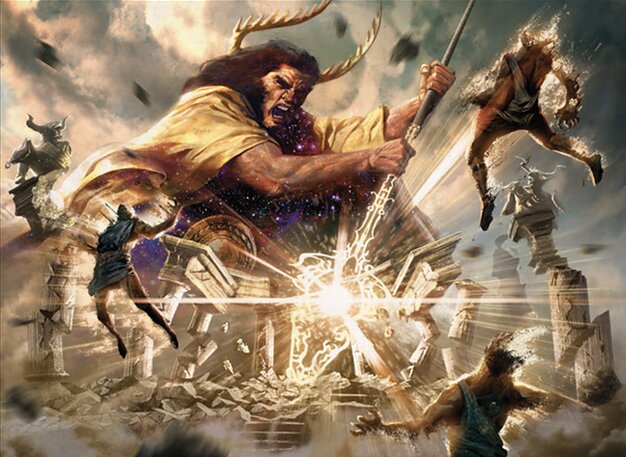
Wrath of God
The bracket 1-2 game runs to turn 12-18. You'll see 18-24 cards by the time the board state matters. At that depth even two wipes give you a 50%+ draw rate. The longer game smooths the variance.
Why asymmetric wipes count as 1.5 slots
Not all wipes hit the same. Wrath of God destroys all creatures. Everyone starts from zero. Cyclonic Rift overloaded bounces all nonland permanents your opponents control. You keep your board. Toxic Deluge lets you pay life to set the indestructible-destroyer threshold. Farewell exiles and lets you choose which card types to hit.
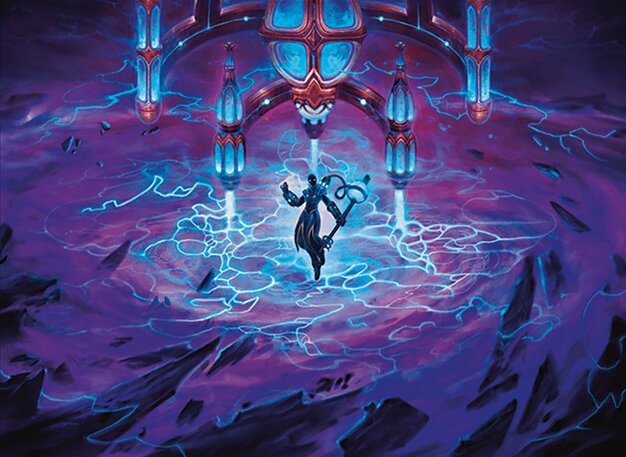
Cyclonic Rift
Asymmetric wipes (ones that spare your board or let you rebuild faster) earn extra weight in the count. If you're running Cyclonic Rift and Farewell alongside two symmetric wipes you're functionally running five wipe effects because the asymmetric ones can break parity.
This is especially true in graveyard-heavy metas. Farewell exiles which hoses reanimator strategies and graveyard combo. Toxic Deluge kills indestructible creatures which symmetric wipes miss. Each asymmetric wipe adds decision texture. You're not just resetting the board. You're choosing what stays and what goes.
Farewell

Graveyard metas (bracket 3+ pods with Muldrotha, Meren, Karador) raise the functional wipe count to 5-6. You need the exile effects and you need redundancy because your opponents rebuild faster than you do.
The replacement problem: wipes compete with ramp and card draw
Here's the tension. Four board wipes means four slots that aren't ramp or card draw. In a bracket 3 deck you're already running 10-12 ramp pieces and 8-10 card draw engines. Add four wipes and you're at 22-26 slots before you've included a single win condition or synergy piece.
This is why bracket 1-2 decks run two wipes. The threat density is lower. The game length is longer. Single-target removal does more work because opponents aren't deploying three threats per turn cycle. Two wipes is enough and the saved slots go to pet cards and flavor includes.
Bracket 4-5 decks run four or more because the games end so fast that losing to an unanswered board on turn 6 is unacceptable. The high-power player would rather draw a wipe they don't need than miss the wipe they do need and lose on turn 7.
Bracket 3 sits in the middle. The casual player running a upgraded precon with a $200 budget can justify three wipes (two symmetric, one asymmetric). The competitive-casual player tuning for their local meta runs four minimum and considers five.
Specific wipes and what they do
Toxic Deluge

Wrath of God is the baseline. Four mana. Destroy all creatures. It's been in print since Alpha (1993) and it's the template every other wipe is measured against. Current price around $6-8 depending on printing. It does exactly one thing and does it cleanly.
Toxic Deluge costs three mana but requires life payment. You pay 1 life per point of toughness you want to kill. In practice you pay 5-7 life to clear a developed board. The upside is it kills indestructible creatures and it costs one mana less than Wrath. The life cost matters in bracket 4-5 where life totals are a resource not a score. Less relevant in bracket 1-2 where players treat 40 life as a cushion.
Cyclonic Rift overloaded costs seven mana and bounces all nonland permanents opponents control. You keep everything. This is the single most-played board wipe in the format per EDHREC data (currently in 38% of blue decks as of writing). The mana cost is high but the asymmetry is worth it. You cast this, untap, and rebuild while opponents are topdecking.
Farewell costs six mana and exiles instead of destroying. You choose which card types to hit (artifacts, creatures, enchantments, graveyards). This flexibility plus the exile clause makes it a meta call. In graveyard-heavy pods Farewell is a 1.5x wipe. In creature-light combo pods it's worse than Wrath because you're paying six mana to exile three creatures.
Mulligans and opening-hand math
The wipe count affects mulligan decisions. If you're running four wipes and you see zero in your opening seven you're statistically likely to draw one by turn 6 (41% chance). You can keep a hand with ramp and card draw and trust you'll find a wipe.
If you're running two wipes and you see zero in your opening seven the chance of drawing one by turn 6 is 23%. That's coin-flip odds. If you're in a bracket 3 pod and you know the game will resolve by turn 10 you might mulligan a zero-wipe hand even if the ramp is good.
This is a secondary reason bracket 4-5 players run more wipes. The mulligan-to-five odds of seeing a wipe in your opening hand go from 25% (four wipes in 99) to 19% (four wipes in 98 after Paris mulligan). That 6-point drop is meaningful when the game ends on turn 7.
The final count by bracket
Bracket 1-2: Run two wipes. Preferably symmetric (Wrath of God, Day of Judgment). The games are long enough that you'll draw into them. Single-target removal does most of the work. Save the slots for fun includes.
Bracket 3: Run three to four wipes. Include at least one asymmetric (Cyclonic Rift or Farewell) and consider one exile-based (Farewell or Merciless Eviction) if your meta runs graveyard strategies. Four is safer than three but three is playable if your curve is tight.
Bracket 4-5: Run four to six wipes. The games are too fast and the boards develop too quickly to rely on single-target removal. Include multiple asymmetric wipes. Accept that you'll sometimes draw two wipes in your opening hand and one will rot. The alternative is losing to an unanswered board on turn 6 which happens more often than drawing too many answers.
This isn't preference. This is math. The threat density per turn cycle scales faster than your draw steps. Board wipes are the only efficient answer to 9+ permanents across three opponents. The bracket determines how many draw steps you get before the game resolves. Match your wipe count to your bracket and the numbers work.
This is a Commander Pulse evergreen. For weekly EDH data digests delivered to your inbox, sign up here.