Design lineage and lore
The Reserved List, briefly: why some staples cost what they cost
And which ones probably never get a reprint.

TL;DR: The Reserved List is Wizards of the Coast's 1996 promise to never reprint about 570 cards. Several Commander staples sit on that list, which means their prices are locked to secondary-market supply with no reprint pressure downward. Knowing which cards are reserved-list and which aren't helps you decide whether to buy now or wait for a reprint to crash the price.
What the Reserved List is
In March 1996, Wizards of the Coast published a policy called the Reserved List. The company promised to never reprint certain cards from early Magic sets. The goal was to protect collectors who had bought cards expecting them to hold value. At the time, Chronicles had just reprinted several expensive cards from Legends and The Dark, crashing their prices. Players who had paid $40 for an Elder Dragon felt burned.
The Reserved List was Wizards' answer. The original list covered cards from Alpha through Fallen Empires. Later updates added cards from Ice Age, Homelands, Alliances, Mirage, Visions, Weatherlight, Tempest, Stronghold, Exodus, Urza's Saga, Urza's Legacy, Urza's Destiny, and Mercadian Masques. After that, Wizards stopped adding new cards. The list froze at about 570 cards.
The policy hasn't changed in 30 years. Wizards has modified it exactly once. In 2010 the company announced it would print premium foil versions of Reserved List cards. By 2011 that exception was revoked after community backlash. Since then, the policy has been absolute. Reserved List cards will never appear in a Standard set, a supplemental product, or a Secret Lair.
The official Reserved List lives on Wizards' site under their reprint policy page. That page is the authoritative source. If a card appears on that list, you can treat its secondary-market price as a floor with no reprint pressure.
Which Commander staples are on the Reserved List
Several high-impact Commander cards sit on the Reserved List. Their prices reflect artificial scarcity.
Gaea's Cradle
Gaea's Cradle is the most expensive Reserved List card in regular Commander play. Currently it trades around $700 for a moderately played copy. The card entered the format from Urza's Saga (1998). It taps for green mana equal to the number of creatures you control. In creature-heavy green decks, Cradle often produces six or more mana per turn by the mid-game. That power level explains the demand. The Reserved List explains why supply never increases.
Volrath's Stronghold
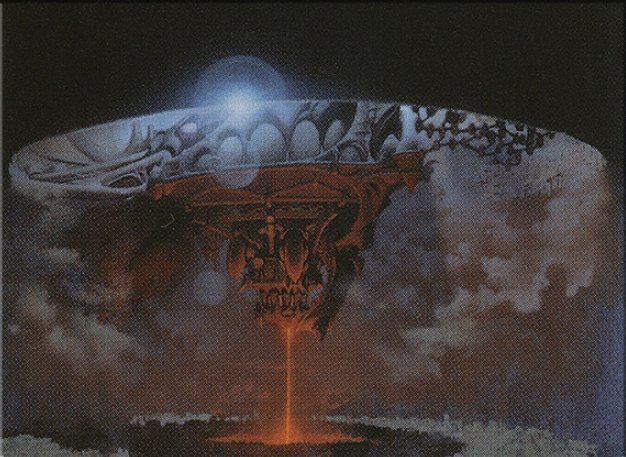
Volrath's Stronghold sits around $45. Also from Stronghold (1998), this legendary land lets you pay two mana and tap it to put a creature card from your graveyard on top of your library. Creature recursion is valuable in Commander. The land slot costs nothing. Several graveyard-focused decks run it. Price is lower than Cradle because the effect is slower and not every deck wants it.
Mishra's Workshop trades around $1,000 but sees almost no Commander play. The card is an artifact-deck powerhouse in Vintage. It taps for three colorless mana that can only be spent on artifacts. Commander's singleton format and 100-card deck size make the Workshop less consistent. Reserved List status keeps the price high despite low Commander demand.

City of Traitors costs about $200. From Exodus (1998), the land taps for two colorless mana but sacrifices itself when you play another land. Fast mana helps explosive early turns. Colorless mana limits what you can cast. Competitive Commander decks use it. Casual decks usually don't.
Intuition is currently around $250. This Tempest instant lets you search your library for three cards and an opponent chooses one to go to your hand while the others go to your graveyard. Graveyard-combo decks use it to set up two pieces of a combo in the graveyard while getting a third piece to hand. The Reserved List keeps it scarce.

Cards that look Reserved List but aren't
Land Tax
Several expensive old cards are not on the Reserved List. Land Tax is the clearest example. This Legends white enchantment lets you search your library for up to three basic lands whenever an opponent has more lands than you. It's powerful in white decks that struggle with ramp. The original Legends printing was expensive for years. Players assumed it was Reserved List.
It wasn't. Wizards reprinted Land Tax in Battlebond (2018) and again in Commander Masters (2023). The Battlebond reprint dropped the price from $60 to $15 overnight. The recent reprint brought it down to about $8.
Mana Drain appeared in Legends and looked Reserved List. For two blue mana, it counters target spell and adds colorless mana to your pool on your next main phase equal to that spell's mana value. The card sat at $200 for years. Then Iconic Masters (2017) reprinted it. The price dropped to $50. Commander Legends followed with another reprint. The card now trades around $35.
The Reserved List is public. If you're considering a high-price card, check the official list before you buy. If the card isn't on it, a reprint could happen at any time.
Why the Reserved List matters for budget decisions
The Reserved List creates a binary. Reserved List cards have prices locked to secondary-market supply. Every damaged copy that leaves circulation raises the floor slightly. Every spike in demand raises the price with no supply answer. Non-Reserved-List cards face eventual reprint risk.
If you're building a deck that wants Gaea's Cradle, waiting won't help. The card will not get cheaper from new supply. You can wait for a market downturn (recession, Standard meta shift that pulls buyers away from eternal formats), but you're not waiting for a reprint. The Reserved List guarantees there won't be one.
If you're building a deck that wants Mana Drain, waiting might help. Wizards has reprinted the card twice in six years. A third reprint in a Commander precon or a Masters set could drop the price to $20. The card is not Reserved List. Supply can increase.
This calculus applies to every expensive card in the format. Knowing which category the card sits in tells you whether the price reflects true scarcity or artificial scarcity.
True scarcity responds to demand but can be solved with supply. Wizards can print more. Artificial scarcity can't be solved. The Reserved List is a permanent supply cap.
The numbers behind Reserved List prices
Reserved List prices follow predictable patterns. High-demand cards with limited supply reach prices where only competitive players and collectors buy. Casual players proxy or skip the card. Moderate-demand cards settle at prices where enfranchised players still buy. Low-demand cards sit cheap despite Reserved List status because nobody wants them.
Gaea's Cradle at $700 represents high-demand Reserved List. The card is powerful enough that competitive Green decks want it. Casual players proxy it. The price reflects the ceiling of what enfranchised players will pay.
Volrath's Stronghold at $45 represents moderate-demand Reserved List. The card is good but not format-defining. Graveyard decks want it. Other decks skip it. The price reflects steady niche demand with no supply expansion.
Illusionary Mask costs about $20 despite being Reserved List (from Antiquities, 1994). The card has confusing rules text and almost no competitive use. Reserved List status doesn't overcome lack of demand.
The pattern is consistent. Reserved List + high demand = $500+. Reserved List + moderate demand = $30-150. Reserved List + low demand = bulk rare prices. The Reserved List sets a floor but doesn't create a ceiling. Demand drives the ceiling.
When Wizards bends the Reserved List (and when it doesn't)
Wizards has never violated the Reserved List since the 2010 foil-premium attempt. The company has issued functional reprints. Crop Rotation from Urza's Legacy is Reserved List. Wizards printed Sylvan Scrying with similar (though not identical) text. Survival of the Fittest is Reserved List. Fauna Shaman creates a similar engine at creature-speed. These aren't reprints. They're new cards that do related things.
The Reserved List policy explicitly allows functional reprints as long as the card name changes. In practice, Wizards rarely prints functional copies of Reserved List cards that would directly replace them in decks. The political risk is high. Collectors who rely on Reserved List protection would view functional reprints as betrayals of the spirit of the policy.
The safest bet is to assume the Reserved List will never change. Wizards has had 30 years to revoke the policy. It hasn't. Players who expect the Reserved List to someday disappear are betting against three decades of precedent.
Practical takeaway
Check the Reserved List before you buy expensive old cards. If the card is on the list, the price won't drop from reprints. You're deciding whether to pay now or proxy. If the card isn't on the list, the price might crash when Wizards includes it in a Commander precon.
The official Reserved List page is maintained by Wizards and searchable by card name. Use it. Don't trust guesses. Land Tax looked Reserved List for 20 years. It wasn't.
Reserved List or not is the single most predictive variable for whether a card's price will ever come down through supply expansion. Everything else is speculation. The Reserved List is policy.
This is a Commander Pulse evergreen. For weekly EDH data digests delivered to your inbox, sign up here.