Combo and win condition theory
Token doublers: the actual stacking order and what each combination does
Doubling Season + Parallel Lives + Anointed Procession. Two pieces vs three pieces is a real difference.
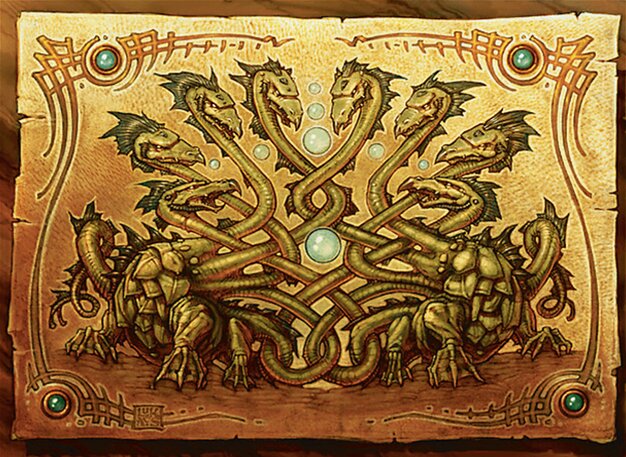
TL;DR: Token doublers multiply, they don't add. One doubler turns 1 token into 2. Two doublers turn 1 token into 4. Three doublers turn 1 token into 8. The math is exponential and you cross from "value play" into "game-ending combo" the moment you assemble two pieces on the battlefield.
The three pieces and what they actually do
Token doubling effects have been part of Commander since 2005. Three cards define the archetype.
Doubling Season
Doubling Season came out in Ravnica (2005). It doubles tokens AND it doubles +1/+1 counters AND it doubles planeswalker loyalty. The second and third effects make it the most expensive of the three pieces (currently $40-50 in paper), but the token doubling is the same as the other two options. One effect creates N tokens, Doubling Season makes it 2N.
Parallel Lives
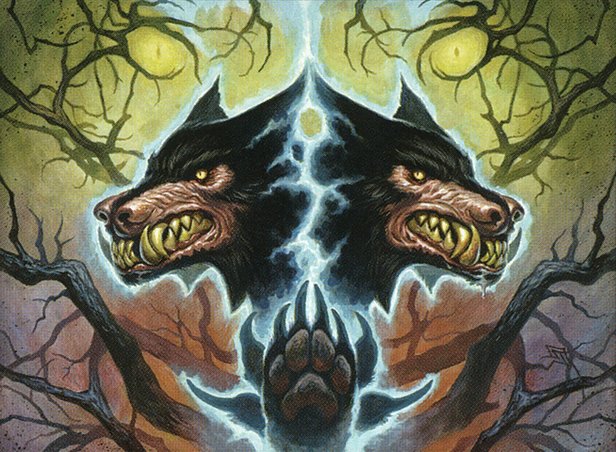
Parallel Lives showed up in Innistrad (2011). Tokens only. No counter synergy, no planeswalker synergy. Green. If an effect would create one or more tokens under your control, it creates twice that many instead. Same doubling math, narrower card.
Anointed Procession
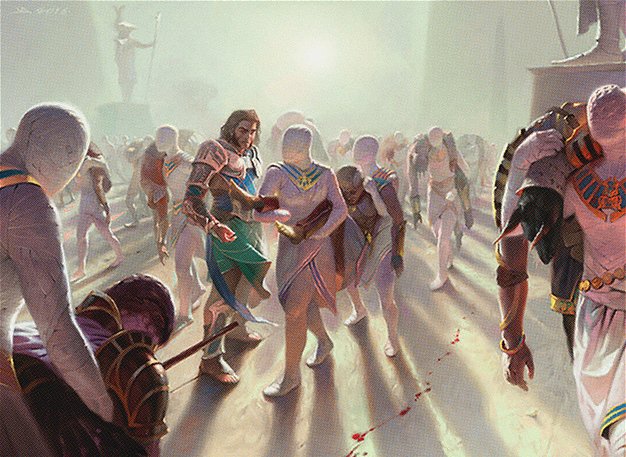
Anointed Procession arrived in Amonkhet (2017). White's version of Parallel Lives. Same text, different color. If an effect would create one or more tokens under your control, it creates twice that many instead.
All three pieces have identical replacement-effect wording for the token-doubling part. The difference is which OTHER effects they care about (counters and planeswalkers for Doubling Season, nothing for the other two) and which colors can cast them.
Why they multiply instead of add
This is the piece most players get wrong the first time they see it.
You have Doubling Season and Parallel Lives on the battlefield. You cast a card that creates 1 token. How many tokens do you get?
Common wrong answer: 3 tokens (1 base + 1 from Season + 1 from Lives).
Actual answer: 4 tokens.
Here's why. Both Doubling Season and Parallel Lives are replacement effects. Per Comprehensive Rules section 614.16, if two or more replacement effects apply to the same event, the affected player (or the controller of the affected object) chooses the order in which to apply them.
The sequence goes like this:
- The original effect tries to create 1 token.
- Doubling Season sees that and says "instead of 1, create 2."
- Parallel Lives sees the NEW event (the one that would create 2) and says "instead of 2, create 4."
You choose which replacement effect to apply first. It doesn't matter which order you pick. If you apply Parallel Lives first, the effect becomes "create 2 tokens," then Doubling Season sees that and makes it 4. Same result.
The math is base × 2 × 2. Not base + 1 + 1. Multiplication, not addition.
With three doublers on the battlefield (Doubling Season + Parallel Lives + Anointed Procession), the math becomes base × 2 × 2 × 2. An effect that creates 1 token creates 8 tokens. An effect that creates 3 tokens creates 24 tokens.
This is not a corner case. Two-doubler boards happen in token-focused decks all the time. Three-doubler boards are rare but not mythical. The difference between "I have 12 tokens" and "I have 3 tokens" is often the difference between winning the game that turn and waiting another two cycles.
The breakpoint: two doublers is combo territory
One token doubler is a value engine. You cast Avenger of Zendikar with 6 lands on the battlefield, you get 12 Plant tokens instead of 6. Nice. The board is stronger. You're not ending the game, you're improving your position.
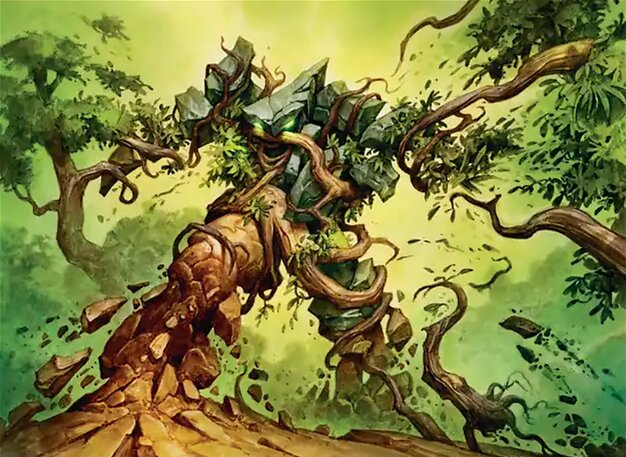
Avenger of Zendikar
Two token doublers cross a threshold.
Same Avenger of Zendikar, same 6 lands. Now you get 24 Plant tokens. If you have a haste enabler (Concordant Crossroads, Temur Ascendancy, any number of red options), that's 24 power swinging immediately. In a 4-player pod with 40 life totals, you're threatening lethal on two players if they don't have blockers.
Three token doublers is a win condition by itself.
Avenger of Zendikar with 6 lands and three doublers: 48 Plant tokens. Even without haste, the table has one turn cycle to find a board wipe or you win. With haste you win on the spot unless someone has Fog effects or a counter for the haste enabler.
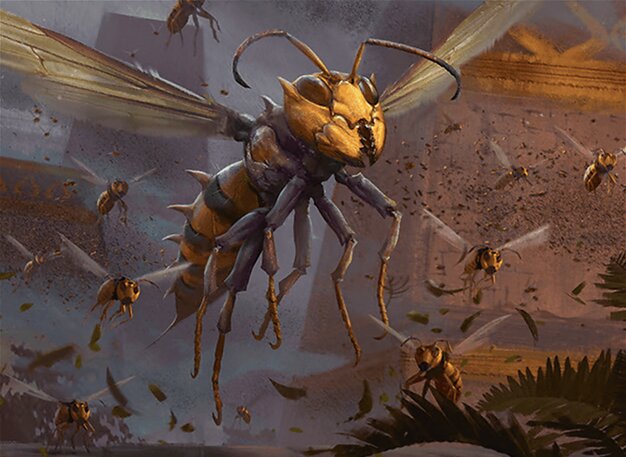
The pattern holds for any token generator. Hornet Queen (normally 4 tokens) becomes 16 tokens with two doublers, 32 tokens with three. Scute Swarm (which already doubles itself) becomes absurd. One land drop with two doublers and 1 Scute on the battlefield doesn't give you 2 Scutes, it gives you 4. The next land drop gives you 16. The land drop after that gives you 64.
At two doublers, the table should be treating your token generation the same way they treat infinite combos. You don't need infinite. You need one good token spell and you end the game.
Which doublers you actually run
Color access decides most of this.
If you're in green, you run Doubling Season and Parallel Lives. Season costs more but the planeswalker and counter synergy is worth it in the decks that care (Superfriends builds, anything with Hydras). Parallel Lives is the budget option and it does the same work for tokens.
If you're in white, you run Anointed Procession. If you're in green-white (Selesnya), you run all three and you lean into the exponential math as your primary win condition.
If you're NOT in green or white, you have Mondrak, Glory Dominus (white, Phyrexia: All Will Be One, 2023) or you have artifact options like Primal Vigor (green effect, but it's an enchantment so colorless decks can't use it) — actually, Primal Vigor is green, not colorless. Scratch that. Artifact token doublers don't exist at the same power level. The effect is gated behind green and white for a reason.
One more piece worth naming: Adrix and Nev, Twincasters. Simic (blue-green) legendary from Strixhaven (2021). Costs 4 mana, doubles tokens. Works the same way as the other doublers — replacement effect, stacks multiplicatively. Simic token decks run this plus Doubling Season plus Parallel Lives and hit three-doubler territory more often than Selesnya does because the commander IS one of the pieces.
What the table should do about it
If you're playing against a token deck and you see one doubler resolve, the correct line is usually to let it happen and save the removal for other threats. One doubler is value, not combo.
If you see a second doubler resolve, you should be holding up instant-speed interaction for the next token spell. Two doublers IS combo. The token player is now in "I win if this resolves" range with most of their payoffs.
If you're the token player, you need to understand this too. Once you have two doublers on the battlefield, you are the threat. Doesn't matter if someone else has more cards in hand or a bigger commander. You are the player who can end the game with one spell. Play accordingly. Sandbag the big token spell until you have protection (counterspell backup, haste enabler, both). Don't run out Avenger of Zendikar into open mana just because you CAN make 24 tokens. Make sure those tokens actually WIN.
The math is clean, the stacking is clean, and the gameplay implication is clear. One doubler is a card. Two doublers is a combo. Three doublers is overkill (but the good kind of overkill).
This is a Commander Pulse evergreen. For weekly EDH data digests delivered to your inbox, sign up here.